Stopping Bill of Lading Fraud at the Dock (New)

Fraud in logistics doesn’t always look dramatic. Often, it starts with something as simple and as risky as a handwritten Bill of Lading (BOL). For manufacturers, distributors, and shippers, these paper documents create an opportunity for manipulation that can lead to lost merchandise, disputes, and costly claims.
Global Roofing Manufacturer Transition to eBOL with SmartBOL

Global Roofing Manufacturer Transition to eBOL with SmartBOL Customer A global leader and multinational manufacturer of roofing supplies with over 30 manufacturing operations across the United States and one of the largest roofing businesses in the world looking to transition to eBOL Environment The customer has a customized warehouse management system and has been using […]
Shipping documentation, approval workflow, and electronic signing for an oil well drilling equipment manufacturer.

Shipping documentation, approval workflow, and electronic signing for an oil well drilling equipment manufacturer.
Driver check-in and electronic bill of lading system for a packaged food manufacturer.

Driver check-in and electronic bill of lading system for a packaged food manufacturer.
Shipping documentation and electronic bill of lading system for a large cosmetic brand company.

Shipping documentation and electronic bill of lading system for a large cosmetic brand company.
Stopping Bill of Lading Fraud at the Dock
Fraud in logistics doesn’t always look dramatic. Often, it starts with something as simple and as risky as a handwritten Bill of Lading (BOL). For manufacturers, distributors, and shippers, these paper documents create an opportunity for manipulation that can lead to lost merchandise, disputes, and costly claims.
Electronic Bill of Lading (eBOL) vs. Paper BOL: Why Smart Shippers Are Going Digital
Electronic Bill of Lading (eBOL) vs. Paper BOL: Why Smart Shippers Are Going Digital
In today’s fast-moving supply chain environment, speed, accuracy, and visibility are no longer optional. Yet many manufacturers, shippers, and 3PLs still rely on paper Bills of Lading (BOLs) a process that introduces delays, errors, and unnecessary cost.
A modern alternative exists: the Electronic Bill of Lading (eBOL). With SmartBOL, organizations can fully digitize their shipping documentation while improving dock efficiency, compliance, and customer service.
What Is a Bill of Lading?
A Bill of Lading serves three critical purposes:
• A receipt for shipped goods.
• A contract of carriage
• A legal document used for claims, audits, and proof of delivery.
While the function remains the same, how that document is created and managed makes all the difference.
The Problem with Paper BOLs
Paper-based BOL workflows often involve:
• Printing and manually filling out documents.
• Physical signatures and re-signatures
• Scanning, emailing, and filing paperwork.
• Searching for documents days or weeks later
These steps slow down docks, frustrate drivers, and create downstream issues for customer service and accounting teams.
The SmartBOL eBOL Advantage
1. Faster Dock Operations
Paper BOL
• Manual document handling
• Driver wait time at shipping offices.
• Rework due to missing or incorrect fields.
SmartBOL eBOL
• Automatically generated from TMS, WMS, or ERP data
• Digital signatures captured in seconds
• Instant document completion
Result: Reduced driver detention and faster truck turn times.
2. Fewer Errors & Disputes
Paper BOLs are vulnerable to:
• Illegible handwriting
• Missing information
• Lost or damaged paperwork
SmartBOL eBOLs:
• Enforce required fields.
• Standardized shipment data.
• Create a complete digital audit trail.
Result: Fewer OS&D issues, chargebacks, and shipping disputes.
3. Instant Visibility & POD Access
With paper BOLs:
• PODs are delayed.
• Customer service teams chase paperwork.
• Billing and claims are slowed.
With SmartBOL:
• eBOLs and PODs are available immediately.
• Documents are searchable by shipment, date, or customer.
• Teams access information in real time.
Result: Faster customer responses and improved service levels.
4. Lower Operational Costs
Hidden costs of paper BOLs include:
• Printing and storage
• Manual data entry
• Time spent retrieving documents
SmartBOL eliminates paper entirely by:
• Automating document creation
• Providing secure, cloud-based storage
• Enabling instant retrieval
Result: Lower cost per shipment and measurable labor savings.
5. Stronger Compliance & Audit Readiness
Industries such as food, beverage, and manufacturing face strict audit and recall requirements.
Paper risks
• Missing or incomplete documentation
• Slow audit response
• Increased compliance exposure
SmartBOL benefits
• Time-stamped, tamper-resistant records
• Long-term digital retention
• Rapid retrieval during audits or recalls
Result: Reduced compliance risk and faster audits.
6. Better Driver Experience
Drivers are often delayed by paperwork—not freight.
SmartBOL supports:
• Self-check-in via kiosk, tablet, or QR code
• One-time digital signatures
• No paperwork to return later.
Result: Improved carrier relationships and faster throughput.
eBOL vs. Paper BOL Comparison
Comparing Paper BOL and SmartBOL eBOL
The transition from traditional Paper Bills of Lading (BOL) to SmartBOL Electronic Bills of Lading (eBOL) transforms key aspects of shipping documentation and workflow. The following table highlights the essential differences between these two approaches:
Feature Paper BOL SmartBOL eBOL
Creation Manual Automated
Signatures Physical Digital
Storage Filing cabinets Secure cloud
Retrieval Minutes to days Seconds
Error Risk High Significantly reduced
Scalability Limited Enterprise-ready
This comparison demonstrates how SmartBOL eBOL streamlines processes, enhances security, and supports scalability, offering significant advantages over paper-based systems.
Why SmartBOL?
SmartBOL is purpose-built for high-volume shippers, manufacturers, and logistics providers. Beyond eBOL, SmartBOL enables:
• Driver self-check-in & kiosks
• OS&D automation
• Claims reduction workflows.
• Long-term document storage
• Seamless system integrations
SmartBOL doesn’t just digitize paperwork, it modernizes the entire shipping workflow.
Final Thoughts
Paper Bills of Lading slow operations, increase risk, and limit visibility. Electronic Bills of Lading, powered by SmartBOL, deliver faster docks, cleaner data, stronger compliance, and better experiences for drivers and internal teams alike.
If your organization is still managing shipping documents on paper, eBOL is one of the fastest, highest-ROI digital transformations you can make.
Global Manufacturer of PetCare Products Transitions All Locations to eBOL

Global Manufacturer of PetCare Products Transitions All Locations to eBOL Customer A global leader and multinational manufacturer of pet food, pet food products, and animal care services. Dedicated to improving the lives of pets including their nutrition and providing high-quality medical care and generating over 500 thousand printed bills of lading yearly thus generating excessive […]
The Business Central ISV Podcast – Episode 7 – SmartBOL
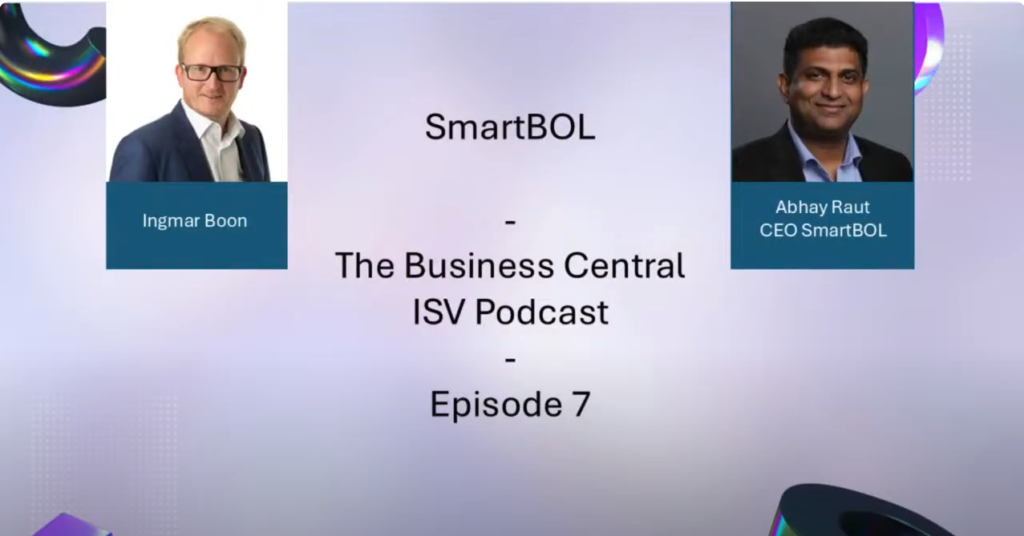
The Business central ISV Podcast – Episode 7 – SmartBOL SmartBOL’s Founder, Abhay Raut, recently joined Ingmar Boon on the Business Central ISV Podcast. During this engaging episode, they explored the impressive 20-year journey of SmartBOL technology. Abhay shared insights into how SmartBOL has evolved over the years and highlighted the significant role Microsoft has […]
Single Sign-On Access Now on SmartBOL Portal